

~ by Pranav Joneja | April,2025
In today’s competitive and skills-driven world, organisations are constantly searching for ways to identify, nurture, and retain top talent. One approach that has steadily gained traction is Competency-Based Assessment. Unlike traditional evaluation methods that focus on past performance or qualifications, competency-based assessments measure an individual’s actual abilities, behaviours, and potential for growth within a specific role. It offers a clearer picture of how someone will perform, not just whether they are technically qualified.
What is Competency-Based Assessment?
A Competency-Based Assessment evaluates a candidate’s or employee’s ability to perform a job role based on pre-defined competencies. These competencies typically include a blend of knowledge, skills, behaviours, and attributes that are critical for success in a given role. For example, a sales role may require strong communication skills, negotiation abilities, cognitive aptitude, and resilience under pressure.
Unlike a traditional resume or interview, which can often fail to uncover soft skills or underlying behaviour patterns, competency-based assessments go beyond the surface. They help organisations answer key questions like:
- Does this person think critically and adapt quickly?
- Can they work collaboratively and handle feedback?
- Do they align with the company’s culture and values?
Why Competency-Based Assessments Are Crucial Today
In a rapidly evolving workplace, competencies are more valuable than ever. Job roles are becoming dynamic, requiring people to upskill frequently. Competency-based assessments help identify the current capabilities of individuals and align them with business goals. This approach is especially effective for:
- Performance Management: Pinpointing skill gaps and areas for development.
- Succession Planning in HRM: Identifying high-potential employees for leadership pipelines.
- Recruitment and Hiring: Ensuring the right fit for the role beyond technical qualifications.
- Learning and Development: Designing personalised training programs based on competency gaps.
Psychometric Tools Used in Competency-Based Assessments
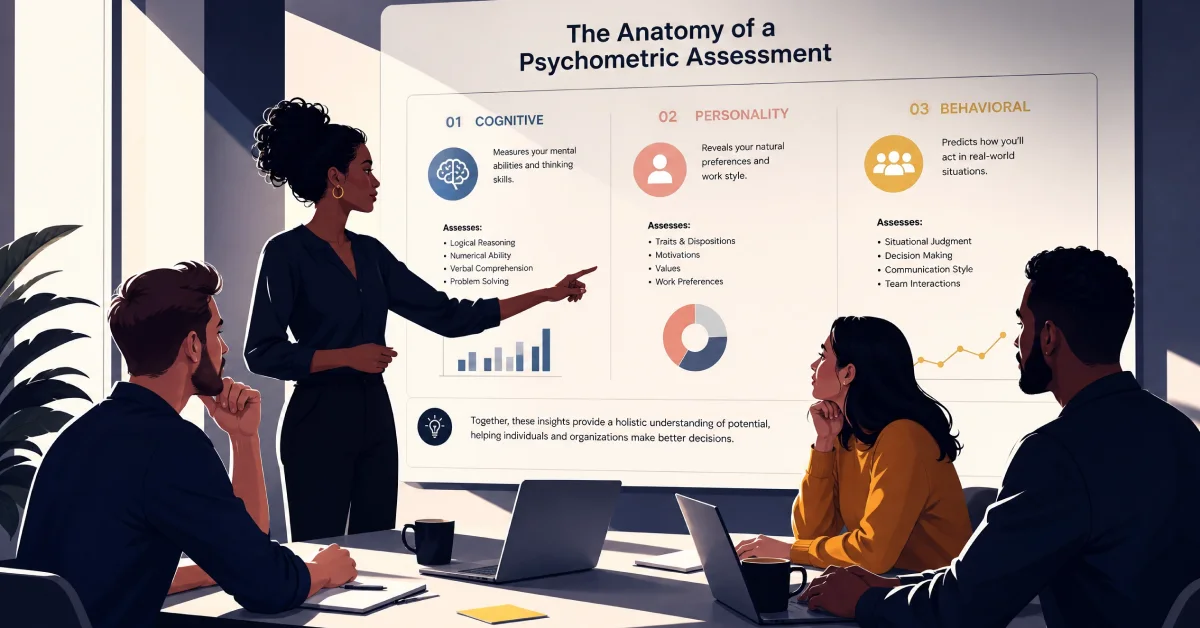
Competency-based assessments often integrate a variety of tools to capture a well-rounded view of an individual, they evaluate personality traits, work behaviours, and decision-making tendencies. The tools used:
1. Cognitive Ability Tests
Cognitive ability plays a crucial role in many competencies. Using a cognitive ability test or a mental ability test online, organisations can assess the critical thinking, problem-solving, and reasoning skills needed in most modern job roles.
2. Leadership Assessment Tests
For managerial or future leadership roles, competency assessments often include leadership assessment tests that evaluate decision-making, emotional intelligence, and strategic thinking.
3. Behavioural Tests and Situational Judgment Scenarios
These are used to simulate real-world situations where an employee’s behaviour is observed in action. It gives insight into conflict management, teamwork, and communication styles.
Applications Across Employee Lifecycle
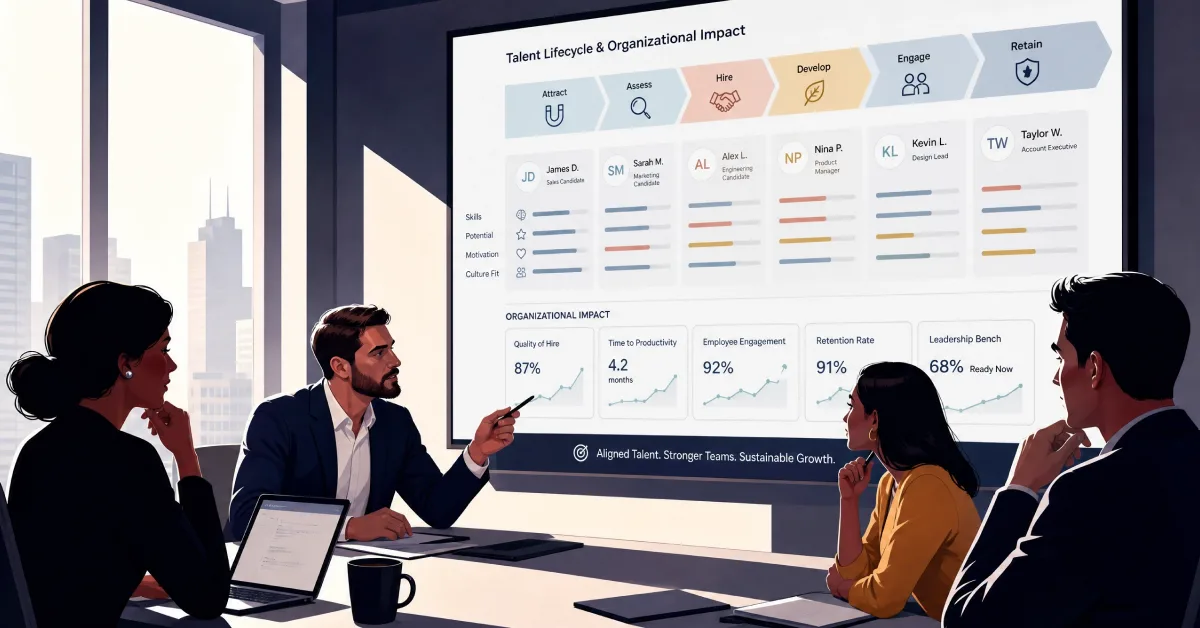
Competency-based assessments aren’t just for hiring. They offer value at every stage of the employee lifecycle:
1. Recruitment and Talent Acquisition
Hiring the wrong fit is expensive and demoralising for teams. Competency-based hiring, supported by psychometric test questions and role-specific assessments, ensures alignment with job expectations. Especially in high-volume hiring or blue-collar workforce recruitment, where skills and work behaviours matter more than formal education, competency assessments help standardise and improve hiring outcomes.
2. Learning and Development (L&D)
Once hired, organisations can use competency data to develop customised training programs. For instance, someone scoring low in analytical thinking can be enrolled in a problem-solving workshop. This approach makes educational assessments more targeted and effective.
3. Succession Planning
With a clear competency map, HR can identify which employees are ready for more responsibility. This is especially useful in succession planning in HRM, helping companies build strong leadership pipelines and reduce reliance on external hiring.
4. Employee Engagement and Retention:
When employees see that their strengths are being recognised and developed, engagement levels rise. Competency-based assessments promote fairness and transparency in promotions, role changes, and development conversations.
Real-World Example: How Companies Use It
Deloitte has long been an advocate of competency-based models. They revamped their performance management system to focus more on future potential rather than past performance. Employees were assessed on competencies such as adaptability, collaboration, and learning agility, with data coming from structured assessments and feedback mechanisms.
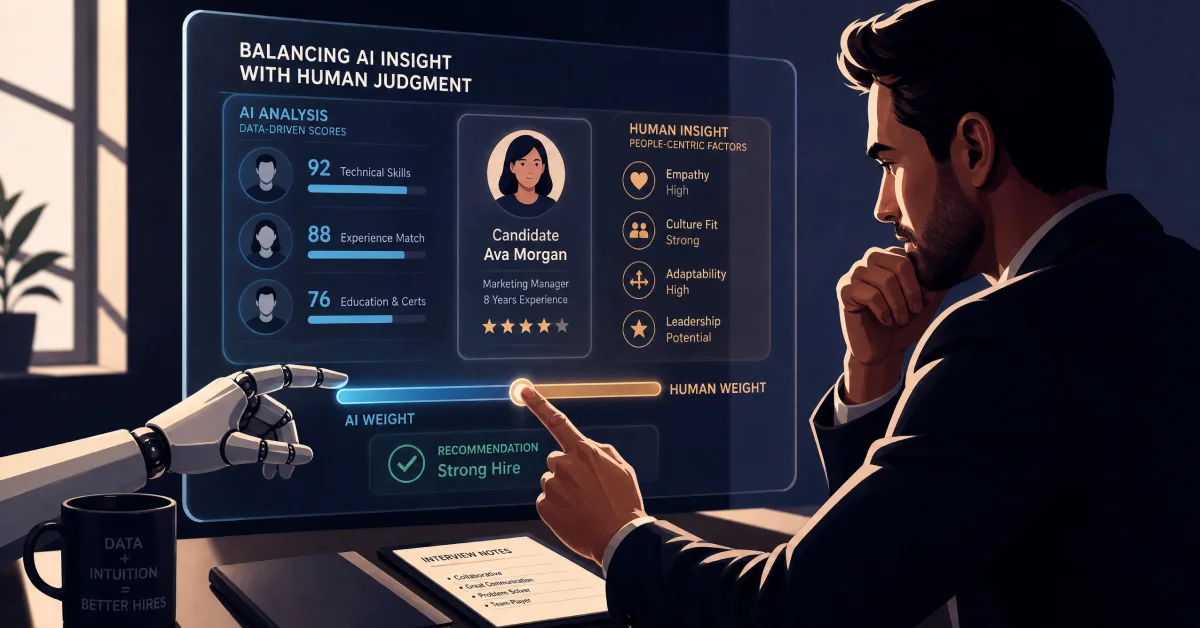
Unilever integrated AI-based tools with their competency framework to make hiring more efficient. Candidates go through online assessments, including psychometric tests and behavioural simulations, to evaluate their alignment with Unilever’s competency model.
These examples show how modern organisations are moving away from intuition-based HR decisions and leaning into structured, data-backed assessment tools.
Best Practices for Implementing Competency-Based Assessments
1. Define the Competency Framework:
Collaborate with department heads and senior leaders to define competencies for each role.
2. Align Tools with Objectives:
Choose the right mix of psychometric assessments, cognitive ability tests, and behaviour-based exercises depending on your goal (hiring, development, or succession).
3. Train Managers and HR Teams:
Ensure assessors understand how to interpret results and integrate them into decision-making.
4. Ensure Fairness and Accessibility:
Make use of psychometric test online platforms to scale assessments and ensure consistency across candidates.
5. Measure and Iterate:
Track outcomes such as performance improvement, promotion success, or reduced attrition to fine-tune your assessment approach.
Conclusion Competency-based assessment enables organisations to go beyond the resume and uncover true potential. Whether it’s through psychometric assessments, cognitive ability tests, or behavioural assessment tools, this approach helps HR teams make better decisions, improve performance, and future-proof their workforce.
As workforce demands evolve, these assessments provide the clarity and consistency needed to build agile, future-ready teams.
9 Links offers a comprehensive suite of tools designed to help organisations identify, develop, and retain talent more effectively. Competency-based assessments aren’t just a trend — they are the foundation of modern, performance-driven HR.
We Appreciate The Feedback From Our Clients.
It is always a joy to hear how our work has positively impacted them and how our assessments have helped in finding the right people.
We have used 9 LINKS psychometric tool in our Campus Placement Programme.The tool has helped us to identify right candidate as per our organisation requirements…

We have just started using it. It differentiates various personalities and helps in decision making. The clarity on its precision level will be gathered over a period of time…

Counselling test curated for NES has been very useful in identifying the skill sets and allotting appropriate job fitment to students as per their quotients. Multilingual tests developed by considering various key…

It is indeed great pleasure in my part to share complementing note to you & your team. Needless to say 9 LINKS is one of the best organisation to conduct skill gap analysis through assessment of Cognitive skills..

It is crucial that validating the quality of the candidates in recruitment. 9 LINKS is a service that we can confidently say does that. 9 LINKS online assessment precisely giving us the right candidates to pick and proceed on recruitment…

Read Our Blog For The Latest On Research & Insights.
Get Insights into latest developments in HR industry and psychometric assessments.
Take a Free Assessment